
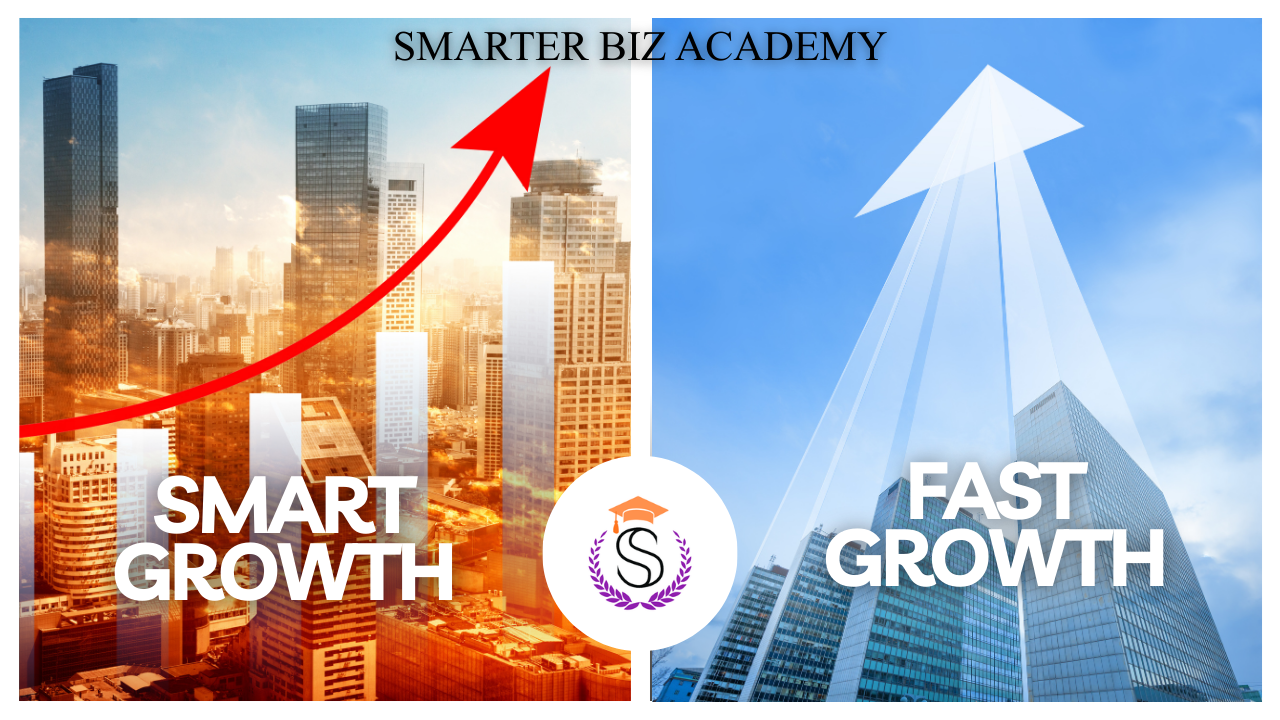
Growth is essential for business success, but not all growth is created equal. This guide explores the differences between fast growth and smart growth, highlighting their advantages, risks, and real-world applications. Learn how to create a hybrid growth strategy that accelerates your business while maintaining stability and long-term success.
Introduction
In today’s competitive business landscape, growth is the name of the game. But the real question is: what kind of growth should you pursue? Should you sprint ahead with fast growth or pace yourself with a smarter, more sustainable strategy?
Understanding the difference between these approaches—and when to use each—can make the difference between scaling successfully and burning out before you reach your potential.
Fast Growth: The High-Speed Lane to Market Domination
Fast growth is all about scaling up rapidly. Think aggressive marketing, explosive hiring, VC funding rounds, and quick expansion into new markets.
Advantages:
- Quickly gain market share
- Attract investor attention
- Capitalize on trending opportunities
- Build brand visibility at lightning speed
Risks:
- Burnout and stretched resources
- Poor customer experience from growing too fast
- Lack of infrastructure to support rapid expansion
- Vulnerability to market shifts or economic downturns
Best For: Startups trying to capture early momentum, businesses in booming niches, or brands with limited-time opportunities.
💡 Tool Tip: Use HubSpot Marketing Hub to scale marketing campaigns quickly and track ROI during rapid growth phases.
Smart Growth: The Strategic Marathon Approach
Smart growth prioritizes long-term sustainability over immediate wins. It focuses on:
- Building a loyal customer base
- Strengthening internal operations
- Growing at a controlled, manageable pace
- Making data-informed, strategic decisions
Advantages:
- Strong foundation for consistent success
- Better customer retention and brand trust
- More adaptable to long-term market changes
- Fewer operational hiccups or quality issues
Risks:
- Slower short-term revenue gains
- Potentially missed fast-moving market opportunities
- May be outpaced by aggressive competitors
Best For: Businesses focused on longevity, values-based growth, and long-term brand reputation.
💡 Tool Tip: Use Trello or Notion to build and manage scalable internal processes while growing strategically.
Which Strategy Wins? It Depends
There’s no one-size-fits-all answer. The right growth strategy depends on:
- Your business goals
- Stage of growth
- Industry dynamics
- Available resources
Most successful businesses blend both approaches: fast growth during peak opportunities, followed by smart growth to consolidate and stabilize.
Pro Tip: Create a Hybrid Growth Plan
Here’s how to combine fast and smart growth effectively:
- Fast-track where it counts: Launch marketing blitzes, push product rollouts, or enter new markets when the ROI is high.
- Build smart systems: Use the momentum to create scalable internal processes.
- Pause and optimize: Review KPIs regularly to ensure growth is profitable, not just busywork.
- Invest in customer relationships: Fast growth gets customers; smart growth keeps them.
- Forecast and adapt: Monitor trends and pivot quickly while protecting your core operations.
💡 Tool Tip: Use Google Analytics to track performance metrics and make informed decisions during growth experiments.
Final Thoughts: Grow with Purpose
Whether you lean toward fast growth, smart growth, or a strategic blend of both, the key is intentionality. Don’t just grow for growth’s sake—grow with clarity, purpose, and resilience.
💌 Build Your Custom Growth Strategy
Grab our FREE Growth Strategy Planner—a printable PDF with guided steps to help you:
- Assess your business
- Map out your ideal growth path
- Execute your strategy with confidence
Download the Growth Strategy Planner + join our email list for weekly business insights
Grow smarter, faster, and stronger—without losing control of your business.