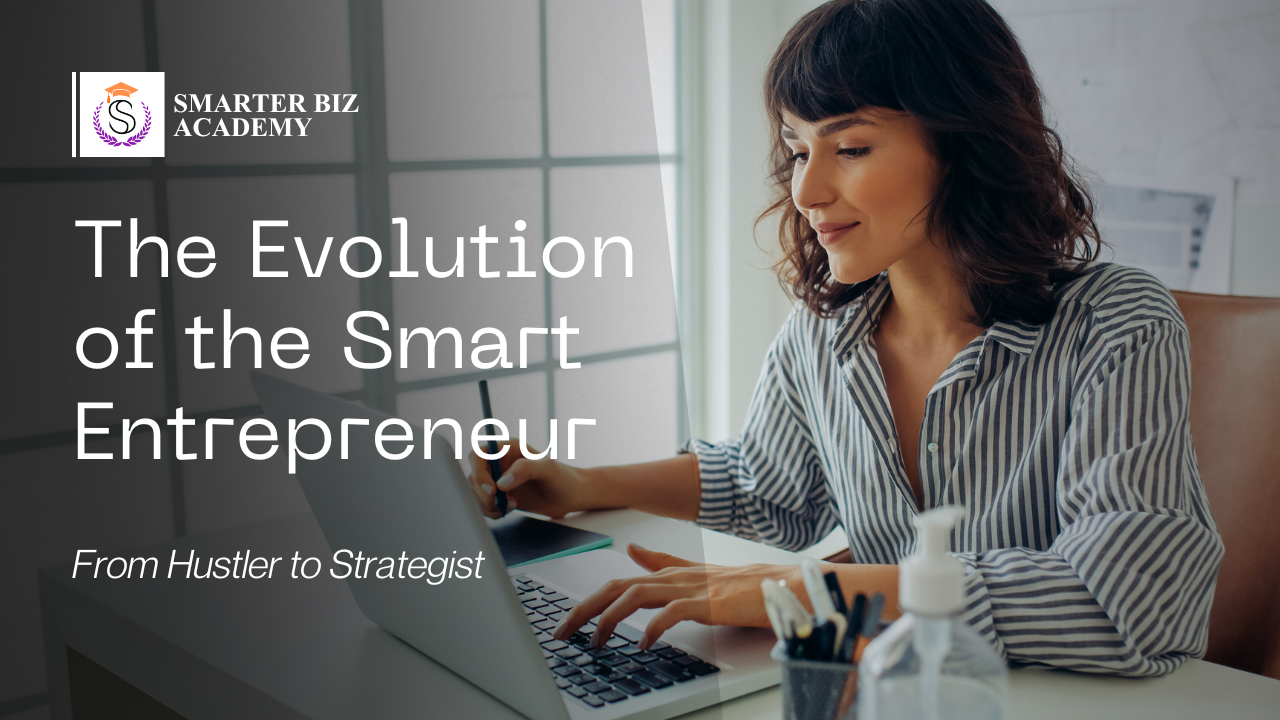
In an era where “grind culture” once defined success, today’s entrepreneurs face a new truth — relentless hustle isn’t the ultimate path to growth. The business world in 2025 rewards not just effort, but intelligent strategy. This article breaks down why pure hustle is outdated, how to evolve into a strategist, and how modern entrepreneurs are scaling smarter — not harder.
Introduction
In the early days of the digital age, working 18-hour days, taking every gig, and “hustling hard” was worn like a badge of honor. Entrepreneurs believed that sheer effort alone could outwork the competition.
But times have changed.
In 2025, hustle without direction is a shortcut to burnout — not business growth. Today’s smartest entrepreneurs are no longer just doers; they’re strategic thinkers. They’ve learned to design scalable systems, build supportive infrastructures, and create business models that multiply results without multiplying stress.
If you’re still stuck in the endless hustle loop, it’s time to make the shift — from hustler to strategist.
🧠 The Hustler vs. The Strategist: What’s the Difference?
Being a hustler and being a strategist aren’t opposites — but one leads to exhaustion, while the other leads to evolution.
Hustler Mindset:
- Focuses on short-term wins
- Reacts to opportunities without a plan
- Prioritizes action over analysis
- Measures success by busyness
Strategist Mindset:
- Focuses on long-term vision
- Plans based on data, not emotion
- Builds repeatable systems and scalable processes
- Measures success by impact and sustainability
👉 Takeaway: A hustler works in the business; a strategist works on the business.
📊 Why Strategy Wins in 2025
The entrepreneurial landscape is more competitive, tech-driven, and customer-centric than ever. To survive and scale, clarity now beats intensity.
Smart entrepreneurs today:
- Use data-driven decisions, not gut feelings
- Automate repetitive tasks to reclaim focus
- Stay three steps ahead of trends
- Build systems that run, even when they rest
💡 Pro Tip: Read Harvard Business Review’s guide to strategic leadership for deeper insights on how top-performing founders think long-term.
🛠 How to Think Like a Strategist
Transitioning from hustle to strategy doesn’t mean slowing down — it means sharpening your focus.
Here’s how to start:
- Set long-term goals. Know exactly where you’re sprinting.
- Track your time. Identify where your energy leaks.
- Systematize your work. Turn daily tasks into documented processes.
- Focus on leverage. Prioritize activities that multiply results.
- Reflect monthly. Review what worked, refine what didn’t.
📚 Suggested Tool: Use Notion or ClickUp to track processes and visualize strategy progress.
🔗 Leverage Tech, Data & Connections
Being strategic means using the digital tools at your disposal. If you’re not leveraging automation and data, you’re playing the business game blindfolded.
Top tools to get started:
- Operations: Notion, Airtable, Trello
- Analytics: Google Analytics, Hotjar, HubSpot
- Automation: Zapier, Make, or ChatGPT workflows
- Networking: LinkedIn, X (Twitter), and remote mastermind groups
🌍 Pro Resource: Join the GrowthHackers community for live strategy sessions and scaling insights from top founders.
💬 Final Takeaway
The grind made you scrappy. The strategy makes you scalable.
You don’t need to abandon your hustle — just evolve it. Let grit fuel your systems, not your exhaustion.
Be the entrepreneur who doesn’t just chase clients but creates a brand that grows even while you sleep. Play the long game. Build the lasting business.
🚀 Ready to Make the Shift from Hustler to Strategist?
👉 Download the Free Strategic Planning Toolkit
Get access to:
- Editable business model templates
- Monthly review & strategy trackers
- Frameworks used by 6-figure founders in 2025
📩 Subscribe to our Strategic Entrepreneur Newsletter for:
- Weekly insights on scaling smarter
- Tool recommendations
- Exclusive growth playbooks and mini-trainings
🔗 Subscribe Now!
💡 Bonus Tools to Explore
- Canva – Create branded visuals for your strategy guides
- Toggl Track – Analyze your productivity time
- Miro – Visualize systems and business models
- Calendly – Automate calls and client bookings