
Overview
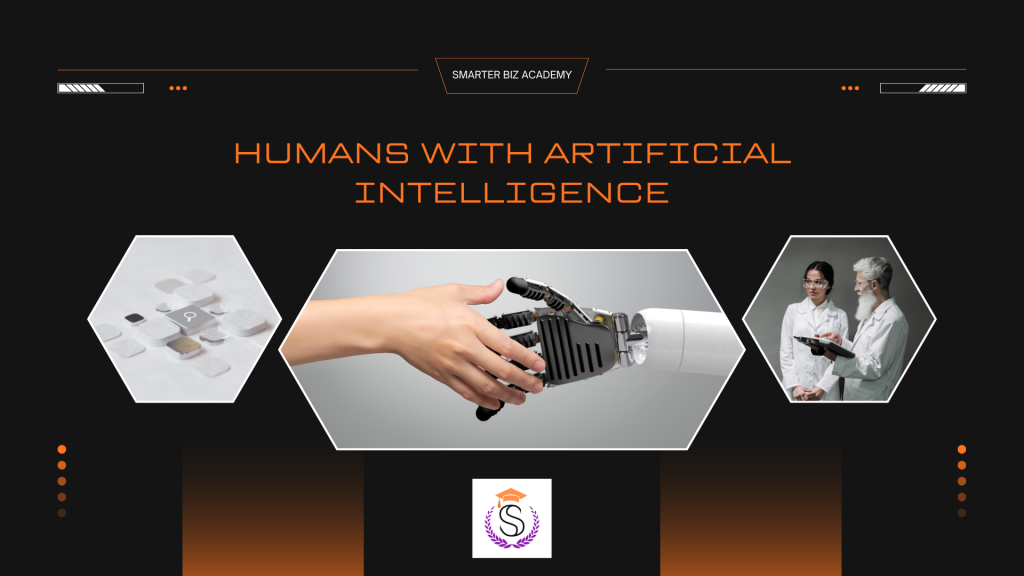
The tale of artificial intelligence (AI) and how it interacts with people is one of the most fascinating chapters in the grand narrative of technological advancement. AI, which was once only a pipe dream, is now a necessary component of our daily existence. The complex and changing relationship between artificial intelligence and humans is examined in this essay. It explores the deep effects of AI on the labor market, how it is revolutionizing healthcare and education, how it might enhance human creativity, and the moral issues that drive this process. We’ll also consider how crucial humans are to influencing AI’s future as we travel across this terrain.
Artificial Intelligence’s Development
Historical Evolution of AI: The origins of artificial intelligence may be traced back to pioneers who ventured to envision computers that could replicate human intelligence. Brilliant minds like Alan Turing, who popularized the term “computability” and raised issues regarding machine intelligence that are still relevant today, set the foundation. With the creation of early computer systems that could mimic human problem-solving in the 1950s and 1960s, the idea of artificial intelligence started to take shape.
Significant advancements in AI were made over time, such as the development of expert systems in the 1970s that could replicate human competence in particular fields. Advanced AI techniques like machine learning and deep learning, which are now the cornerstones of contemporary AI, were made possible by these early AI systems.
AI Research Milestones: There have been many noteworthy turning points in the development of AI. The global chess champion Garry Kasparov was defeated by IBM’s Deep Blue in 1997, marking a turning point in the development of AI’s capacity for strategic thought. More recently, AlphaGo’s triumph over the world Go champion demonstrated AI’s capacity to learn intricate and antiquated games that depend on strategy and intuition.
These accomplishments show how AI has advanced remarkably in handling jobs that call for both processing capability and human-like reasoning and decision-making. They are evidence of the unrelenting efforts of AI researchers to expand the capabilities of robots.
Current Status of AI Technology: In the modern era, artificial intelligence is not just a pipe dream but a genuine, actual technology that permeates every aspect of our daily life. Because of their exceptional accuracy in answering our queries and carrying out activities, virtual assistants such as Siri and Alexa have become well-known. AI-powered recommendation engines make content and product recommendations based on our interests, personalizing our online experiences. Driven by AI-powered algorithms that evaluate real-time data to guarantee efficiency and safety, autonomous cars traverse our roadways.
AI permeates every aspect of our lives and is not limited to research facilities or tech behemoths. It has sparked innovation in a variety of fields, improved productivity, and upended entire sectors.
The Effect of AI on the Workforce
*Automation and Job Displacement*: The effect of AI on the workforce is one of the main topics of discussion. AI and robotics-driven automation has the potential to replace some jobs, especially those that need routine and repetitive work. Concerns around job security and the possibility of unemployment in specific industries have resulted from this.
It’s important to understand, though, that AI’s effects on the workforce go beyond job loss. AI also opens up new career paths and prospects. The need for skills that work with AI technologies is highlighted by the growth of AI-related professions like data science and machine learning engineering. Furthermore, AI frees up human workers to concentrate on jobs that call for creativity, critical thinking, and emotional intelligence by automating repetitive and tedious operations.
Enhancement of Human Capabilities: AI is a tool that enhances human capabilities rather than just replacing human work. AI is capable of processing enormous datasets, finding patterns, and offering insights at scales and speeds that are faster than those of humans. AI in healthcare helps physicians diagnose illnesses by analyzing medical imagery with previously unheard-of precision. AI in finance analyzes market data and spots trends to optimize investment strategy.
AI essentially acts as a force multiplier, augmenting human knowledge and judgment. AI enables human workers to more successfully address complicated problems rather than making them redundant.
The Future of Work in the AI Age: The nature of work is about to change as AI develops further. The future of employment is a cooperative relationship rather than a sharp division between people and AI. In order to provide insights, automate repetitive processes, and increase productivity, AI systems will increasingly collaborate with human workers.
Upskilling and reskilling will be essential for the workforce to effectively adjust to these developments. People who are digitally literate and have a thorough understanding of AI technology will be better equipped to succeed in the changing labor market as AI becomes a more integral element of many sectors.
Quick break!! We have a lot of courses that’s related to Artificial Intelligence thath can also help you. Let me give you some:
https://smarterbizacademy.com/courses/biz-coaching-playbook-with-ai/
https://smarterbizacademy.com/courses/zapier-ai-playbook/
https://smarterbizacademy.com/courses/youtube-playbook-with-ai/
Let’s continue..
AI and Ethical Considerations
Fairness and Bias in AI Systems: Although AI systems are very good at processing information and forecasting outcomes, they can still be influenced by biases in the training data. Biased AI systems have the potential to generate unfair or discriminatory results, which presents ethical questions. For instance, if the training data contains historical biases, AI algorithms employed in recruiting procedures may unintentionally give preference to some demographic groups over others.
It’s a constant struggle to address bias and guarantee fairness in AI systems. In addition to identifying and reducing prejudice, ethical AI development entails creating AI systems with equity and openness in mind. This means that AI algorithms must be continuously observed, assessed, and improved in order to conform to moral standards.
Privacy and Data Security: Due to AI’s capacity to handle enormous volumes of data, strict privacy protection measures are required. Strong data security and protection procedures are necessary for ethical AI development in order to prevent misuse or illegal access to personal data.
AI privacy issues are especially relevant in fields like healthcare, where patient data must be treated with extreme caution. Finding a balance between the protection of patient privacy and the use of AI in healthcare is a difficult ethical problem that needs serious thought.
AI in Decision-Making and responsibility: Concerns regarding responsibility are raised by AI’s growing role in decision-making procedures including credit scoring, criminal justice, and medical diagnosis. Who is accountable for mistakes or biases made by AI systems when their conclusions have major ramifications?
Clear rules for accountability and openness in AI decision-making processes are essential to the development of ethical AI. AI system decisions are guaranteed to be in line with human values and social standards when procedures for human monitoring and accountability are established.
AI in Medicine and Healthcare
AI-Assisted Diagnosis and Treatment: AI has a significant impact on healthcare. AI-powered medical diagnostic technologies provide unmatched accuracy in analyzing a wide range of medical imaging, including CT, MRI, and X-rays. By helping medical personnel identify illnesses in their early stages, these AI systems enhance patient outcomes and enable prompt therapies.
AI systems, for instance, are able to see minute irregularities in medical photos that humans might miss, allowing for the early detection of diseases like cancer. AI-powered triage systems have the potential to save lives in emergency scenarios by prioritizing patients according to the severity of their ailments.
Drug Discovery and Personalized Medicine: AI is revolutionizing the drug discovery and development process, which is infamously time-consuming and costly. AI speeds up the development of life-saving drugs by simulating molecular interactions and using enormous databases to forecast possible therapeutic ideas.
Another advancement in healthcare is personalized medicine, which adjusts treatment regimens based on a patient’s genetics, medical history, and reaction. In order to analyze patient data and make informed treatment recommendations, artificial intelligence is essential. This lowers the possibility of negative responses and side effects in addition to ensuring more effective therapies.
Medical AI’s Ethical and Privacy Issues: Although AI has great promise for the healthcare industry, there are ethical questions it also brings up. Securing sensitive medical data and preserving patient privacy are critical. It is crucial to guarantee that AI systems are impartial and treat every patient fairly.
Furthermore, it’s still difficult to keep the human element in healthcare. Healthcare workers’ empathy and compassion cannot be replaced by computers, even though AI can improve diagnosis and treatment planning. Finding a careful balance between technical advancement and maintaining human-centered care is necessary for the ethical growth of AI in healthcare.
AI in the Classroom
AI-Powered individualized Learning: AI has revolutionized education, especially in the area of individualized learning. AI algorithms are used by adaptive learning systems to evaluate students’ progress and modify course material to meet each student’s unique requirements. By addressing each student’s unique strengths and limitations, this customized method improves learning outcomes.
AI-driven learning platforms can provide students individualized study schedules, suggest additional resources, and modify assignment levels to correspond with students’ skill levels. This promotes a deeper comprehension of the material in addition to increasing retention.
AI in Remote Learning and Online Education: The COVID-19 pandemic hastened the uptake of remote learning and online education, making AI a vital tool for supporting these teaching modalities. AI-powered intelligent tutoring programs give pupils immediate feedback, which improves their understanding of difficult subjects.
AI-powered automated grading systems free up teachers from administrative duties so they can concentrate on instruction rather than evaluation. AI may also examine data on student performance and engagement to find possible learning gaps and areas that need more focus.
Challenges and Ethical Issues in AI Education: Although AI has the potential to completely transform education, there are also ethical issues with it. Protecting student data privacy is crucial, particularly in online learning settings. In order to guarantee fair educational experiences for every student, it is also crucial to address any biases in educational AI algorithms.
Instead of replacing teachers, artificial intelligence (AI) in education should be seen as a tool to enhance their work. To create meaningful learning experiences, educators must strike the correct balance between technological innovation and the human touch.
AI and Human Communication
Chatbots and virtual assistants: One of the most obvious and useful uses of artificial intelligence in our daily lives is the emergence of chatbots and virtual assistants powered by AI. Because of their superior natural language processing skills, these AI systems can comprehend and react to human requests and questions.
From answering trivia questions to sending reminders and managing smart home appliances, virtual assistants such as Siri, Alexa, and Google Assistant provide a variety of functions. Chatbots are used in customer service to provide prompt and effective answers to questions and problems.
These exchanges show how AI can comprehend and interpret human language, which makes it a useful tool for increasing efficiency and convenience in a variety of settings.
AI in Social Media and Communication: Our online experiences, especially on social media platforms, are greatly influenced by AI algorithms. AI-powered recommendation systems select material based on our likes and preferences. AI algorithms seek to present us with the most interesting and pertinent stuff, whether it be news articles, product suggestions, or entertainment.
But there are also moral questions raised by increasing dependence on AI systems. Since content can affect our viewpoints and mold our online interactions, it is imperative to ensure transparency in its selection and presentation. Furthermore, careful evaluation of AI’s function in content curation is necessary to solve problems associated with the dissemination of false information and echo chambers on social media platforms.
The Emotional Bond Between AI and Humans: In certain cases, people form emotional bonds with AI-powered things. Humanoid robots, chatbots, and virtual pets have all been created to emotionally connect with their users. AI has the ability to evoke emotional reactions, as seen by the reports of people developing attachments with these AI beings.
For instance, chatbots that are intended to offer emotional support have been used in mental health environments. For those looking for emotional support and direction, these AI-powered conversational agents provide an approachable and nonjudgmental channel.
But the emotional bond between people and AI also brings up moral concerns regarding the limits of these bonds and the possibility of being dependent on AI-powered emotional assistance.
AI in Creativity and Art
AI-Generated Music and Art: AI’s entry into the creative and artistic spheres is both fascinating and contentious. Artificial intelligence (AI) algorithms can now create poetry, music, and art. These artificial intelligence-generated works are capable of producing new forms of creative expression and imitating a variety of artistic styles.
AI algorithms and musicians have started working together to discover new creative possibilities. AI is viewed by some as a tool for pushing the limits of what is creatively possible and enhancing artistic possibilities. AI-generated art asks us to reevaluate the place of human creativity in the creative process and questions established ideas of authorship.
The Role of AI in Creative Industries: AI is influencing creative industries like advertising and content production in addition to fostering individual artistic expression. AI-powered solutions can automate tedious content creation processes, such as creating visuals and marketing copy.
The use of AI in the creative sector raises concerns about the future of creative careers and the changing role of human artists. The human touch is still indispensable in creative interpretation, storytelling, and brainstorming, even though AI can expedite some parts of content production.
Examining the Limits of AI and Human Creativity: The collaboration of AI and humans in creative domains encourages us to investigate the limits of creativity in general. In a world when artificial intelligence (AI) can produce visually appealing and emotionally impactful art, what function does the human artist play? We are prompted to consider the nature of creativity and the special contributions that people make to the creative process by this philosophical investigation.
The Prospects for AI and Human Cooperation
The Potential of AI to Solve Complex Problems: AI has the potential to solve difficult global issues because of its capacity to analyze enormous datasets, spot trends, and generate forecasts. AI can be crucial in generating novel solutions in domains such as epidemiology, climate modeling, and environmental protection.
AI-powered climate models, for example, can forecast future trends, evaluate previous data, and guide mitigation efforts for climate change. Predictive analytics powered by AI can assist in detecting illness epidemics, enabling prompt resource allocation and action.
The Social and Ethical Consequences of Advanced AI As AI develops, ethical issues play a bigger role in both its creation and application. It is crucial to make sure AI systems respect human values and the welfare of society. Establishing moral standards and laws requires cooperation between governments, organizations, and AI developers.
Concerns like prejudice, fairness, openness, and accountability must be addressed for AI to be developed responsibly and ethically. Ethical standards must guide the creation of AI technology, and procedures for auditing and assessing AI systems should be established to guarantee that these values are followed.
The Role of Humans in Creating the Future of AI: The role that humans play in determining the course of AI’s growth is arguably the most important component of the interaction between AI and humans. Humans are active participants in the AI revolution, influencing its advancement, application, and regulation rather than being passive onlookers.
The degree to which AI advances society and is consistent with our values will depend on the decisions we make at this pivotal juncture in the technology’s development. Ensuring that AI technologies are developed and implemented responsibly, ethically, and with the welfare of humanity in mind is a shared responsibility.
In conclusion
The narrative of artificial intelligence and humans is one of collaboration, creativity, and moral obligation. Once a far-off dream, artificial intelligence (AI) is now a real thing that is revolutionizing industries, increasing productivity, and spurring innovation. We must keep ethical issues front and center as we negotiate the intricacies of AI’s effects on the labor, healthcare, education, creativity, and human relationships.
Humans and artificial intelligence have a synergistic interaction rather than a binary one. The way AI has developed from an idea to a pervasive presence highlights how revolutionary it can be. We must acknowledge that AI frees us up to concentrate on tasks that call for creativity, critical thinking, and emotional intelligence rather than worrying about losing our jobs.
AI is a useful tool in healthcare for diagnosis and therapy, but it cannot take the place of medical experts’ human touch and empathy. AI in education allows for personalized learning, although mentorship and direction are still given by teachers.
Our engagements with AI show that technology can comprehend and adapt to human requirements, whether through creative collaborations or virtual helpers. But we need to be on the lookout for these connections’ boundaries and ethical issues.
Our ideas of what it means to create are challenged by AI’s role in art and creativity. It challenges us to reflect on the nature of creativity and the unique contributions that people make to the creative process.
AI has the ability to solve a number of difficult global issues in the future, including as disease prevention and climate change. However, it is our duty to make sure AI development complies with moral standards and advances society.
The story of the collaboration between AI and humans is dynamic and ever-changing. It is a tale of cooperation, ingenuity, and common principles. In the upcoming chapters, let us strive to use AI’s revolutionary potential for the benefit of humanity, guided by moral principles and a dedication to a day when humans and AI collaborate to build a more intelligent, effective, and caring world. The mutually beneficial link between humans and artificial intelligence is more than just a technological story; it is evidence of the human spirit’s tenacity, inventiveness, and moral obligation.
What a great and helpful topic!
Did you know that you can also use our SMART(ER) Reference Library to view more topics and course? Just click the link below:
https://smarterbizacademy.com/smarter-reference-library-bookshelf-1-general/
Thank you and enjoy!